



Dr. Ashok Gupta is the founder Director of The Play House, India International School , IIS Centre for Information Technology, International College for Girls, International School of Informatics & Management & FM Radio 7, ICG Institute of Educational Research & Development, International Institute of Management, Engineering & Technology and IIS (Deemed to be University).
Latest Update as on 03 Sep 2026
Checked on 03 Sep 2026
As of 03 Sep 2026, no official exam notification, result, or admission update directly tied to the article 'Higher Education After Covid-19 Pandemic Scenario' by Dr.
As of 03 Sep 2026, no official exam notification, result, or admission update directly tied to the article 'Higher Education After Covid-19 Pandemic Scenario' by Dr. Ashok Gupta, Vice Chancellor of IIS University, Jaipur, has been confirmed through any official source. This article appears to be an academic commentary or opinion piece rather than an exam-specific notification. IIS University Jaipur continues to offer undergraduate, postgraduate, and doctoral programmes, and its 2026-27 admissions cycle is likely in progress based on typical institutional patterns. Students seeking admission to IIS University or looking for post-COVID higher education policy shifts should visit iisuniv.ac.in for the latest official announcements. At the national level, UGC and the Ministry of Education continue implementing NEP 2020 reforms relevant to the themes Dr. Gupta discusses. Students should monitor official portals and not rely on third-party sources for admission deadlines or policy changes.
- Article by Dr. Ashok Gupta, VC, IIS University Jaipur, appears to be a thought-leadership piece on higher education post-COVID-19 — no exam cycle is associated (tentative classification).
- IIS University Jaipur admissions for 2026-27 academic session are expected to be underway or nearing closure, based on typical July–September enrolment patterns (unconfirmed).
- No specific exam notification linked to this article has been identified; students interested in IIS University programmes should monitor the official site through Sep–Oct 2026 (estimated).
- Post-COVID higher education policy updates at national level (NEP 2020 implementation milestones) are expected to continue through 2026-27, per UGC's previously announced roadmap (tentative).
- Any new guidelines from UGC or AICTE affecting higher education admissions are typically announced between July and October each year — check official portals for 2026-27 updates (pattern-based).
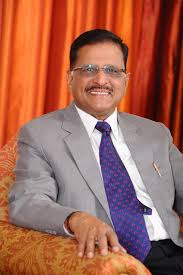
He is an eminent educationist who has made unforgettable contribution to restore the richness of educational culture and to make it more vibrant than before. His farsighted leadership, commitment to work, penchant for perfection, high concern for students and the breadth of vision has elevated the institutions to a center of learning where education is a commitment and the training of the whole person a mission.
The questions are framed in perspective of higher education after Covid-19 pandemic scenario.
Q1. Do you believe that Covid-19 has made a significant impact on the conventional education system that exists in our country? We would like to hear your thoughts on this.
A1. COVID-19 crisis has had a deep impact on global economy, jolting almost all sectors- especially education. As per a UNESCO report, the pandemic has adversely affected millions of students worldwide due to the closure of educational Institutions in the wake of the lockdown. We all know that extended closures will not only weaken the continuity of learning, but will also engender far-reaching economic and societal consequences like loss of human capital as well as economic opportunities in the long run. It’s impact will be more pronounced where education system is struggling with low learning outcomes and a high dropout rate.
However, being an optimist, I think we need to look at the other side of the picture as well. On a positive note, I would say, Covid-19 is actually an opportunity in disguise. Educators in our country had been for some time now, debating on how to educate the IT savvy current Generation and the ones to come. The pandemic has forced experts to look beyond the conventional brick & mortar mode of education. It has pushed us out of our comfort zone and has fast tracked our efforts to transform the traditional talk-chalk teaching model into one marked by digital-anchored pedagogy with a focus on skill development and a more collaborative approach. So, in a way it has proved to be a tipping point for ushering in new trends that will have a positive impact on our higher education in times to come.
Q2. What impact has Covid-19 created in education system as well as in your institution in particular? And how are you adapting to the situation?
We, at IIS (deemed to be University), had taken a timely cognizance of the untapped potential of IT and had already started the process of systematically merging e-learning approach not only in the content of the courses but also in the pedagogy and co-curricular activities. A case in point is Integration of MOOCs in our curricula since the beginning of the last academic session. Therefore, when the classes were suspended due to pandemic sometime in Mid-March 2020, within ten days we seamlessly shifted from off line to on line classes. Our IT Department conducted workshops to help teachers to devise innovative solutions within a relatively short time. Lectures were delivered using interactive apps, asynchronous online learning tools and synchronous face-to-face video instruction. The faculty also made use of e platforms like Kahoot and Survey Monkey to assess student learning through quizzes and short tests. Remedial & revision classes were also conducted online. The teachers went beyond the syllabi and conducted value added webinars and workshops for students and faculty. Contrary to some survey results conducted in India & abroad, we were pleasantly surprised to find that not only did the attendance in these classes went up significantly but student participation also increased appreciably.
The University has also taken the initiative of conducting Semester End Examinations online under proctored conditions for all semesters across all programmes. This has also proved to be a successful exercise with the student attendance rate at these exams being 99.5% which is much higher than the traditional paper pen off line evaluation system. Further, in keeping with the guidelines issued by the UGC, the University has sensitized its faculty to be more empathetic towards the academic and emotional problems experienced by the students. They have been providing psychological support, guidance and counselling to the students online. This has further strengthened the bond between them.
Buoyed by the response, the University has procured licenses for Microsoft Team Platform for subsequent online classes and other sessions. The Faculty at the University is now undergoing training for developing online courses to be launched on our website for the benefit of our students. This will give further impetus to our efforts to streamline a more robust hybrid model of teaching-learning.
Q3. Do you think that the courses offered by educational institutions would change in the future? Share your insights on this.
Yes, the courses offered by the Universities will have to change. We will have to design courses that will focus on capacity-building of young minds and develop skills that will drive their employability, productivity and well-being. I was recently reading a Dell Technologies report which stated that 85% of the jobs in 2030 that Generation Z and Alpha will enter into have not been invented yet! This shows that we will have to anticipate and develop courses which will cater to the needs of different sectors ten years from now like courses related to the fourth industrial revolution in emerging areas of science and technology such as genomics, data Science, robotics, AI, nanomaterials. In other faculties like Liberal arts, Commerce and Management also, the focus should shift to courses which will focus on know-how needed to build Start Ups, catalyse entrepreneurial ventures, and develop People skills and life skills like resilience and adaptability. Further, the new educational paradigm should have strong underpinning of ethical considerations, intercultural awareness and critical thinking. Further, I feel that we should also design courses on Indian traditional knowledge which has the potential to develop sustainable technologies and medicines and integrate them in the mainstream curricula. I would also like to highlight a few opportunities to focus on in future like tie ups with industries and other organizations for virtual labs, virtual internships, project-based learning, collaborative and interdisciplinary research in emerging areas for a more wholesome and futuristic academic experience.
Q4. Currently online education is being practiced as part of an adaptation strategy across the world. How effective is this type of education system? And which type of education system do you think students as well as parents would prefer after the pandemic situation?
I personally think that we will have to go for a blended or hybrid mode of education. A solely digitalized model seems to be a viable solution for the period of lockdown. However, it cannot completely replace the classroom model because the latter has more scope for personalized attention and face to face interactions. Post-Covid-19, a large number of students would still prefer a full university experience as there is no substitute for the ambience of the university campus and live learning with peers in the classroom. Secondly, digital education, in its current format, is not very inclusive because of its limited reach to students in rural and remote areas as well as to differently abled sections of the society. So, while the offline model will not become obsolete post-Covid-19, it will be effectively supplemented by digital learning. We will have to judiciously blend the two. While the concept learning takes place online, classroom time can be effectively employed in guided practice, discussions and developing creative problem solving and other life skills.
Q5. Would you share certain guidelines for the students on how to cope up with the current situation as well as on how to take smart decisions on their future as well?
First of all, maintain a daily routine to structure your day, decrease your exposure to media to avoid information overload, focus on self -directed learning and thinking, stay connected with your friends and relatives, live by your values, practice compassion, show gratitude for the pluses in your life, take up hobbies and focus on what you can control.
Since the colleges and universities have not reopened yet, you have a lot of free time. Use it creatively. Join some online course to broaden your skill repertoire, this will enhance your employability quotient. The shelf life of skills in today’s fast paced world is getting to be short. Therefore, you need to continuously upgrade them. Additionally, keep exploring what are the new technologies and avenues for work which have come up in your chosen field so that you can plan accordingly. If possible, go for an online internship programme or a virtual industry-based project. This will substantially add to your resume.
Q6. A lot of online courses and skill workshops are being offered by many ed-tech companies. Would you please share on the importance of such courses as well could you highlight certain courses and skills that you feel students can learn during this period?
The concept of technology in classroom is not new. However, EdTech has now widen its scope beyond making textbooks available online. It is now data-driven and is increasingly making use of adaptive learning, video content and immersion technology to revolutionize the way people learn. It is contributing immensely towards redefining the conventional model of higher education and transforming the traditional career path. The courses driven by EdTech are not only catering to the learning needs of students but also adults, who are increasingly required to refresh their knowledge and acquire new skills. The courses offered are flexible and student centric. In fact, many of the World’s top universities have integrated MOOCs in their curricula. Education, one of the sectors most resistant to change has benefitted the most from technological innovation.
Students can take up short term courses related to latest technology and global issues which will broaden their horizons and enhance their employability. They can learn soft and social skills such as communication, career navigation, work ethic, innovation, persuasion, personality development, emotional intelligence to name a few.
Vice Chancellor, IIS (deemed to be University), Mansarovar, Jaipur 302 020, (Raj.) India
Major Changes This Year
No major change has been officially announced yet in connection with this article or any associated exam or admission process. The article by Dr. Ashok Gupta is an analytical overview of how Indian higher education has evolved post-COVID-19, touching on themes such as online learning, hybrid models, and institutional resilience. Any structural changes to IIS University's programmes, eligibility, or admission patterns for 2026-27 have not been confirmed through official source material. Students are advised to treat any circulated information as tentative and verify directly on iisuniv.ac.in.
Frequently Asked Questions
What exam or admission is linked to the article 'Higher Education After Covid-19 Pandemic Scenario' by Dr. Ashok Gupta?
No specific exam is linked to this article. It appears to be an academic or opinion piece by the Vice Chancellor of IIS University Jaipur on the state of higher education post-COVID-19. No exam notification is associated with it as of 03 Sep 2026.
What is IIS University Jaipur and who is Dr. Ashok Gupta?
IIS University, Jaipur is a private university in Rajasthan, India, known primarily for women's education. Dr. Ashok Gupta has served as its Vice Chancellor. The university offers programmes across arts, science, commerce, management, and technology.
Are IIS University Jaipur admissions open for 2026-27?
Based on typical annual patterns, IIS University admissions for the 2026-27 session are likely underway or nearing closure as of September 2026. However, this is unconfirmed — check iisuniv.ac.in for the official status.
What key points does Dr. Ashok Gupta make about higher education after COVID-19?
While the full text was not fetched from an official source, such articles typically address topics like the shift to online/hybrid learning, digital infrastructure challenges, mental health of students, policy reforms under NEP 2020, and institutional adaptation strategies. Treat specific claims as unverified without the original text.
How has COVID-19 changed higher education in India according to experts?
Broadly, COVID-19 accelerated digital adoption, online learning platforms, blended education models, and highlighted infrastructure gaps. Policy bodies like UGC and the Ministry of Education have since pushed NEP 2020 implementation to address these gaps, but specific claims from this article remain unverified here.
Where can I find the official article or related resources by IIS University?
You can visit iisuniv.ac.in — the official website of IIS University, Jaipur — for publications, articles, and admission-related information. No direct URL to this specific article was confirmed in official sources.
Is there any UGC or government notification related to post-COVID higher education changes in 2026?
UGC and the Ministry of Education continue rolling out NEP 2020 reforms through 2026-27. For the latest official circulars, check ugc.gov.in or the Ministry of Education's official portal. No specific 2026 notification was confirmed in the source material available here.